REVIEW · ZERMATT
Zermatt: Tandem Paragliding Flight – Best Matterhorn Views
Book on GetYourGuide →Operated by Matterhorn Paragliding GmbH · Bookable on GetYourGuide
Matterhorn views from above feel unreal. This tandem paragliding flight in Zermatt turns one of Europe’s most famous peaks into a real-time sky experience, with certified pilots and huge glacier-and-valley sightlines. I like that it’s built for first-timers: you focus on breath, balance, and photos, while your pilot handles the wing, the timing, and the safe flight plan—your job is just to enjoy the ride.
Two things I really like: you get warm flysuit gear plus full safety equipment, so the cold doesn’t run the day, and you fly in a small group limited to 6. One consideration: you still need a moderate fitness level, since passengers must run a short distance for takeoff, and there are clear limits for weight, age, and certain health conditions.
In This Review
- Key Things to Know Before You Fly
- Entering Zermatt for the Sky Ride
- Cable Car Time: Why the Ride Up Feels Like Part of the Experience
- The Matterhorn Photo Stop: Small Walk, Big Focus
- The Short Run to Launch: The Part You Shouldn’t Overthink
- 25 Minutes of Swiss Alps Aerial Time
- Landing at Spissstrasse 11: Clean Finish, Quick Reality Check
- Price and Value: When $388 Makes Sense
- Who This Tandem Flight Fits Best (and Who Should Skip It)
- Smooth Day Tips That Prevent Stress
- Should You Book Matterhorn Paragliding in Zermatt?
- FAQ
- Where do I meet the pilot?
- What is included in the tandem paragliding price?
- Do I need prior paragliding experience?
- What should I bring and wear?
- Who is this not suitable for?
- What happens if the weather is unsafe to fly?
Key Things to Know Before You Fly
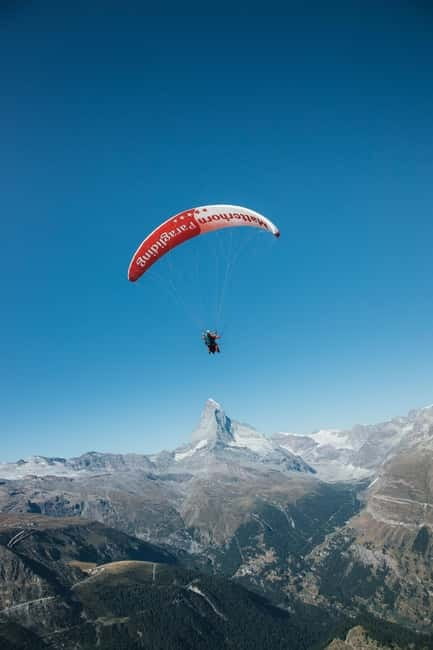
- Matterhorn-first route: you’re set up for the peak’s best angles, not a random sky loop.
- Small group size (max 6): more personal attention and less waiting around.
- Fully geared for cold: flysuit, helmet, hat, and gloves are included.
- Tandem flight for beginners: no paragliding experience needed; your pilot runs the show.
- You still do a short run: takeoff requires a bit of effort on your part.
Entering Zermatt for the Sky Ride
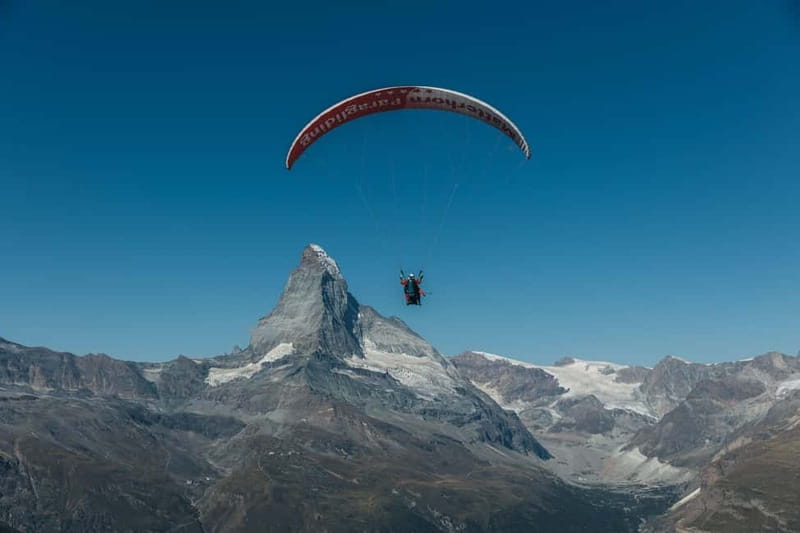
Zermatt has that rare mix of charm and altitude drama. Streets feel calm and scenic, but the mountains are never far away. Doing tandem paragliding here makes sense because the Matterhorn is close enough to feel present—like it’s watching you—yet your flight gives you the kind of perspective you simply can’t get from any viewpoint deck.
You start at Vispastrasse 32, then move toward the takeoff area using a cable car segment. You’ll spend about 30 minutes on that connection, which matters because it keeps the day paced. Instead of rushing from shop to shop, you get a clear “go up, gear up, fly” rhythm.
This is also where the trip starts being practical. Since the takeoff spot depends on conditions, you’ll want to treat timing as flexible rather than rigid. One small logistics note that can save you stress: your meeting point is outside the bottom station of the funicular by the big map, and the exact meeting location may shift based on takeoff conditions.
You can also read our reviews of more tours and experiences in Zermatt.
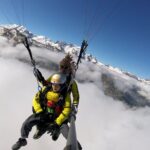
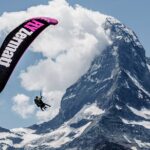
Cable Car Time: Why the Ride Up Feels Like Part of the Experience
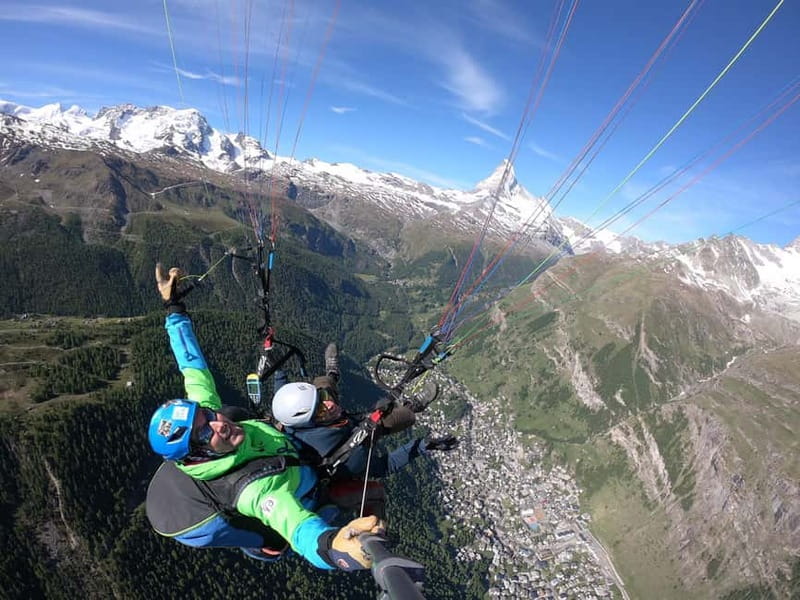
That cable car window is not just transportation. It’s a visual warm-up. As you climb, you get quick flashes of the valley layout—roads, ridgelines, and the way the snowfields sit above town. When you’re later in the air, those shapes start to make sense fast.
From a comfort standpoint, the ride helps too. Paragliding days can feel “sprinty” if everything happens at street level. Here you’re elevated step-by-step, then you’re briefed before anything happens in the wind. That pacing is one reason first-time flyers often feel calm once they’re actually suited up.
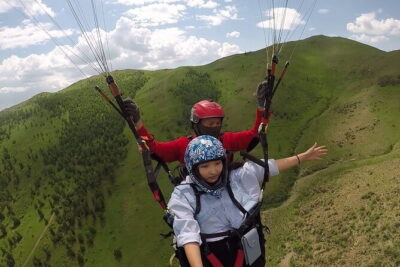
And yes, it’s still cold up high. The good news is your trip doesn’t assume you’ll arrive dressed perfectly. You’ll be given a flysuit to keep you warmer, plus helmet, hat, and gloves. That gear is a big value point, because it turns “will I freeze” into “I can actually enjoy this.”
The Matterhorn Photo Stop: Small Walk, Big Focus
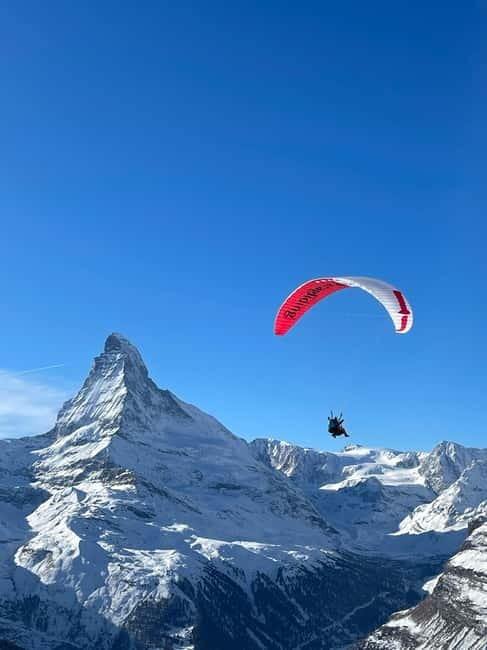
Once you reach the mountain area, the experience shifts from travel mode to flight mode. You get a Matterhorn photo stop, with a short walk and a safety briefing that comes before you launch. It’s only about 15 minutes, but it’s exactly the right length: enough time to orient, not so long that you’re stuck waiting with nerves building.
This part works because it does two jobs at once:
- It lets you see the target peak clearly before you’re in the sky with it. The Matterhorn becomes more than a postcard.
- It turns you from spectator into passenger. You learn what to do and when to do it—especially important if you don’t do heights well.
A few pilots are known by name from the flight experience: people have mentioned guides like Alin, Val, Alex, Alan, Joel, Bruce, Eric, and Jann/Yan. The common theme across those names is communication. People often describe the briefing as thorough and calming, which is what you want when your “first time” includes a run and a wing opening overhead.
Possible drawback here: if you’re arriving expecting a long sightseeing pause, this moment is brief. You’ll get your peak time, then you’re moving on. If you want a deep, slow Matterhorn moment, pair this with extra time on the ground the same day.
The Short Run to Launch: The Part You Shouldn’t Overthink
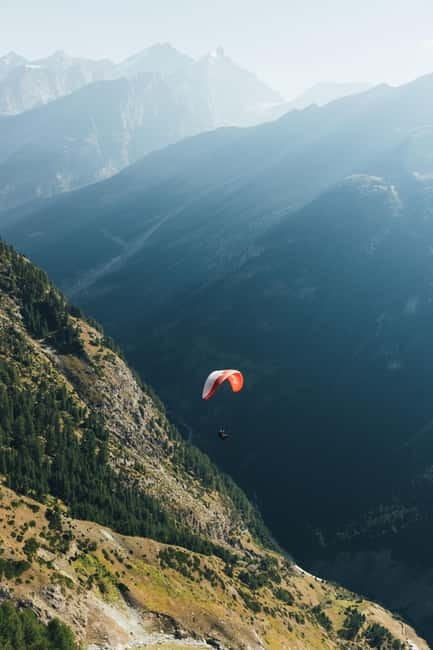
The key physical detail you should plan for is the short run for takeoff. It’s not a marathon, but it does mean you shouldn’t treat this like a zero-effort activity. Wear waterproof shoes, and dress warm even if Zermatt looks mild when you start.
The good part: this is tandem paragliding. You’re not juggling controls, speed, or altitude decisions. Your pilot manages the wing and the flight path. Your job is to follow instructions and keep moving when it’s time.
This is where I think the small-group setup helps. With fewer people, pilots can keep attention tight and timing smoother. You’re limited to 6 participants, so the briefing and launch flow stays organized instead of feeling like cattle sorting.
25 Minutes of Swiss Alps Aerial Time
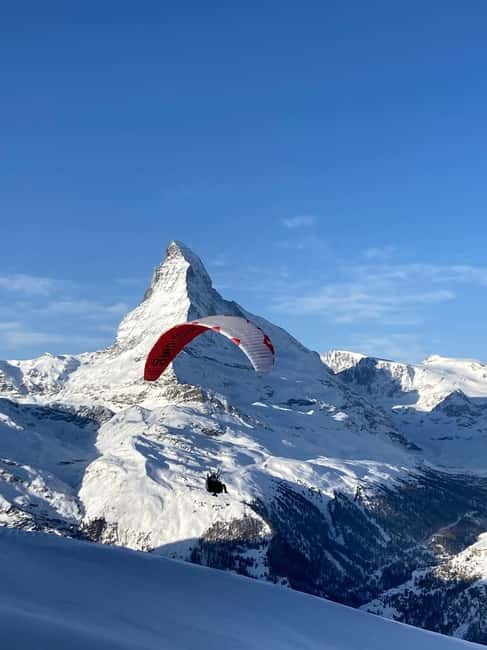
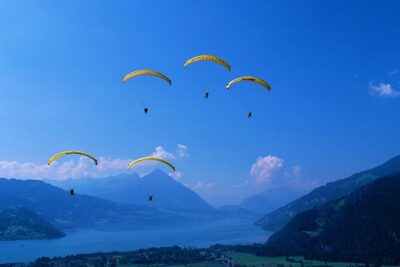
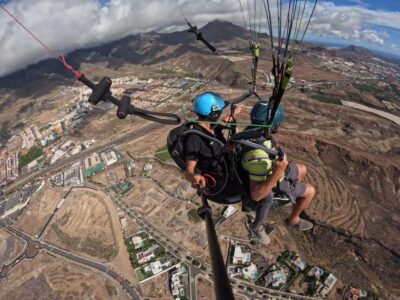
Once you lift off, the flight time is about 25 minutes airborne. That’s long enough to settle in, feel the rhythm of gliding, and still have that “wait, I’m really doing this” feeling during the first minutes.
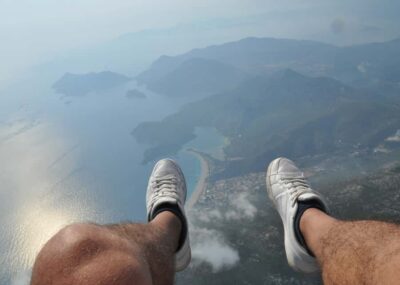
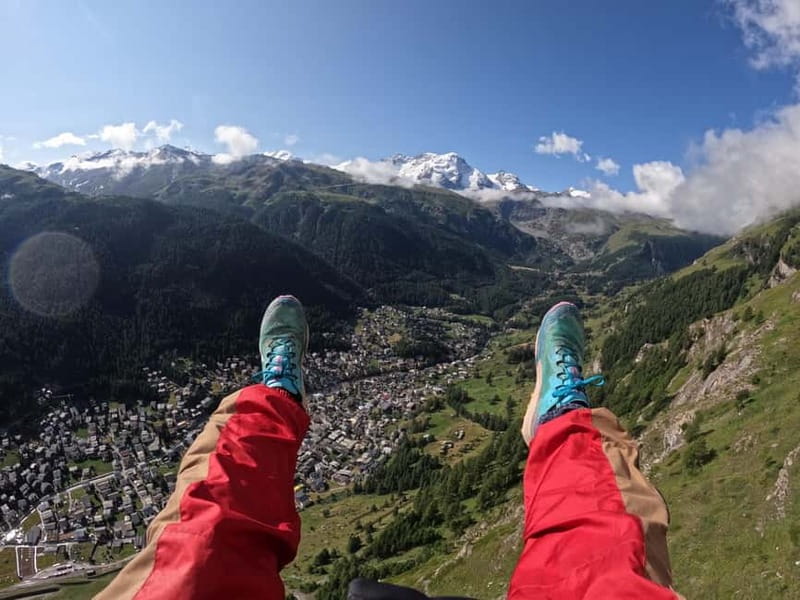
What makes this special is the view pattern. You’re not only looking at the Matterhorn straight-on; you’re also watching how the valley opens and how glaciers and ridges relate to each other. The peak becomes a fixed landmark while everything else moves around it.
You might even spot wildlife below. The experience can include chances to see animals like ibex, chamois, marmots, or golden eagles. It’s not guaranteed, but the mountains here are alive, and your height gives you a better shot at noticing.
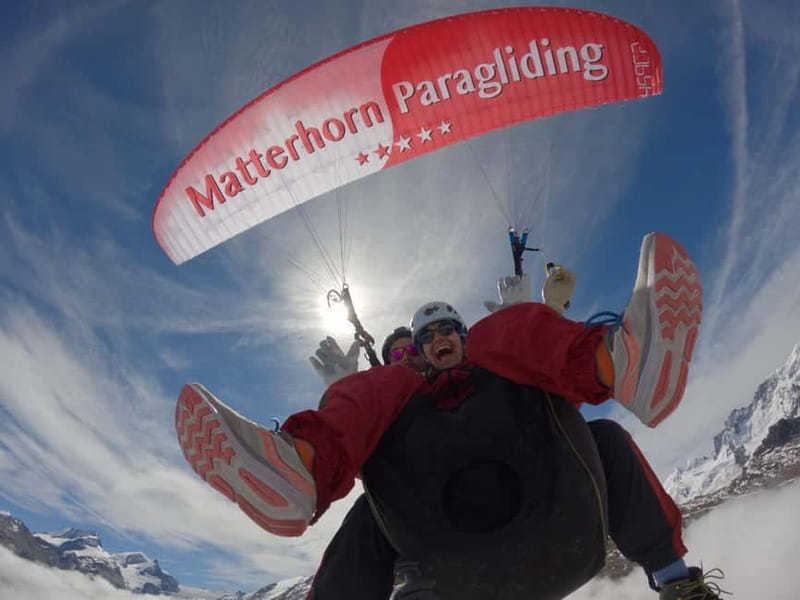
From the flight-experience side, people have described it as thrilling and relaxing at the same time. That balance tends to happen when your pilot keeps you steady and explains what’s happening. Names that come up in a positive way include pilots such as Bruce, Eric, and Alan, and several flights are described as calm, professional, and safe-feeling even for first-time flyers.
Also, you’re not just riding forward. Some pilots have offered light, fun guidance during landing time, and a few passengers mention minor maneuvering. Don’t expect a stunt show, but do expect your pilot to match the flight to your comfort level.
Landing at Spissstrasse 11: Clean Finish, Quick Reality Check
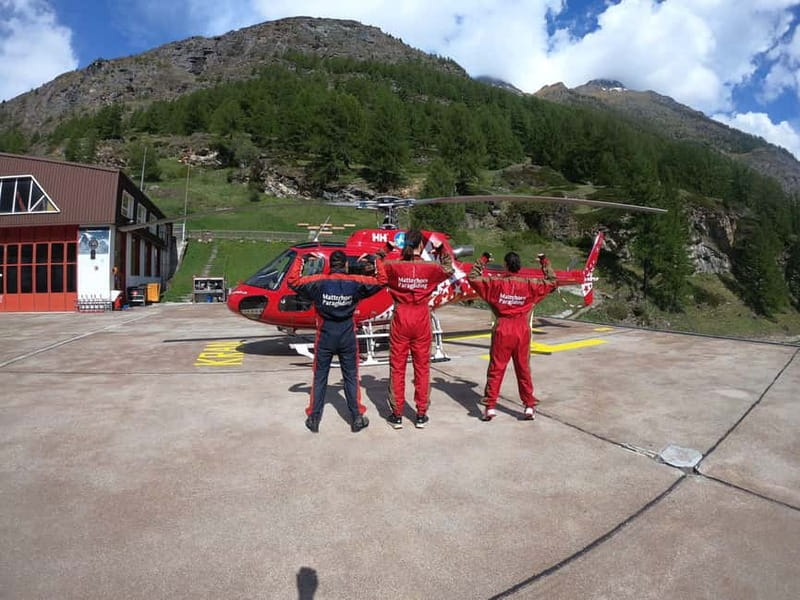
After the aerial section, you wrap back up and finish at Spissstrasse 11, 3920 Zermatt. That return matters because it helps the day feel complete rather than cutting off abruptly after you land.
What I like about this kind of finish is how quickly it lets you return to normal life. You don’t need to “recover” for hours. Instead, you can walk, grab coffee, and process what you just saw from above. And if you bought the optional photo/video package after the flight—priced at 40 CHF per person—you’ll have something tangible to replay when the sky memory starts fading.
Price and Value: When $388 Makes Sense
The price is $388 per person for a 2-hour overall experience, including the tandem flight and pilot. On paper, it’s not cheap. In Zermatt, that’s normal. The real question is value.
Here’s where it earns its keep:
- You’re paying for a certified, experienced pilot and the full tandem setup.
- You get all necessary equipment, plus the warm flysuit, helmet, hat, and gloves. Those cold-weather items can make or break enjoyment.
- The flight delivers a “you can’t replicate this” viewpoint over the Matterhorn and surrounding Alps—the kind of perspective that’s hard to buy any other way.
Two costs to watch:
- Lift or transportation to takeoff is not included. The pilot assists with buying it, but you still need to plan for it. Some passengers mention using a one-way train connection from Zermatt to Riffelberg as part of their day.
- The optional photo/video package is extra at 40 CHF.
If your goal is photos, this flight is money well spent. If your goal is the lowest cost adventure, Zermatt has cheaper options. But if you want “real air time over the Matterhorn,” the price-to-experience ratio feels fair.
Who This Tandem Flight Fits Best (and Who Should Skip It)
This activity is designed for beginners. You do not need paragliding experience. Still, it’s not “everyone can do it.”
Based on the stated limits, this flight is not suitable for:
- children under 4
- pregnant women
- people with back problems
- people with heart problems
- people over 65
- people over 200 lbs (91 kg)
You also need moderate fitness, mainly because of the short run at takeoff.
If you’re the kind of traveler who likes controlled risk—something exciting but guided—this fits your style. If you freeze up at the idea of heights or sudden movement, be honest with yourself about your comfort. The good news is pilots often do a strong job calming nerves. The bad news is physics and wind don’t care about confidence.
Practical tip: bring warm clothing and sunglasses, and keep everything simple. No luggage or large bags, and no backpacks. The goal is to keep your hands free and your movement easy during the preflight steps.
Smooth Day Tips That Prevent Stress
A few small details can make the difference between a fun morning and unnecessary waiting:
- Arrive early enough to find the meeting point: outside the bottom station of the funicular by the big map.
- Don’t assume your guide will meet you at one random taxi spot. One common mistake people make is waiting in the wrong spot relative to where the guide is standing.
- Keep an eye on weather changes. If conditions aren’t right, the flight can be canceled or rescheduled, and you should expect possible timing or meeting-location adjustments.
Also, check your footwear. Waterproof shoes matter because alpine paths can be slick.
Should You Book Matterhorn Paragliding in Zermatt?
Yes, I’d book it if you meet the basic requirements and you want the Matterhorn from a perspective you can’t fake. This is one of the most direct ways to turn Zermatt’s biggest icon into a lived experience: glide time, close peak angles, and Swiss Alps views that feel bigger than any photo.
I’d think twice (or choose a different kind of activity) if:
- you can’t handle the short run at takeoff
- you fall under the stated health/age/weight limits
- you expect a long, ground-based sightseeing day rather than an air-focused adventure
If you’re a first-timer, this is also a smart move because the setup is built around safety and instruction, not athleticism. Warm gear, tandem flying, and a small group size all point to an experience that’s made to feel manageable—even when you’re looking straight at the Matterhorn from the sky.
FAQ
Where do I meet the pilot?
Please wait outside the bottom station of the funicular by the big map. The exact meeting location can change depending on takeoff, and you’ll be informed before the flight.
What is included in the tandem paragliding price?
The flight includes the tandem paragliding experience, your pilot, a safety briefing, all necessary equipment, plus a flysuit, helmet, hat, and gloves.
Do I need prior paragliding experience?
No experience is needed. This is a tandem flight, so you fly with a fully certified and experienced pilot.
What should I bring and wear?
Bring warm clothing, sunglasses, a public transport ticket, and waterproof shoes.
Who is this not suitable for?
It’s not suitable for children under 4, pregnant women, people with back problems, people with heart problems, people over 65, and people over 200 lbs (91 kg).
What happens if the weather is unsafe to fly?
The company can cancel or change timing/takeoff location due to conditions. If you cannot fly due to weather or safety conditions, you receive a full refund.