REVIEW · ZERMATT
Zermatt: Tandem Paragliding Flight – Best Matterhorn Views
Book on GetYourGuide →Operated by Matterhorn Paragliding GmbH · Bookable on GetYourGuide
Zermatt from above is unreal in the best way. This tandem flight puts the Matterhorn right in your line of sight while you drift over Swiss valleys and glaciers, with wildlife like ibex or golden eagles sometimes in the mix. I love that the team keeps it organized and calm, so the adrenaline comes from the air, not from confusion.
Two things I especially like: first, the pilots are consistently described as professional and safe, with names like Bruce, Alan, and Yan showing up in the crew you might fly with. Second, the setup is full-service, including gear plus warm layers, so you’re not improvising your way into the Alps. The one real consideration is physical: you’ll need a moderate fitness level because passengers run a short distance for takeoff.
In This Review
- Key Reasons This Matterhorn Paragliding Flight Gets Top Marks
- Why Zermatt Tandem Paragliding Feels Different Than a Typical Thrill
- The 2-Hour Flow: What Happens After You Meet Your Pilots
- Cable Car Time and the Build-Up to the Launch
- The Matterhorn Photo Stop: Where You Get Oriented Fast
- Main Flight Time: 25 Minutes Above Snow, Glaciers, and Valleys
- Safety, Gear, and the Pilot Team (Names You Might Fly With)
- Price and Value: Why $341 Can Make Sense in Zermatt
- What to Bring (And What to Leave Behind)
- Who This Flight Suits Best (And Who Should Skip It)
- Weather Reality in the Alps: Your Best Chance to Fly
- Photos, Video, and Reliving the Moment
- Quick Practical Tips Before You Go
- Should You Book This Matterhorn Tandem Paragliding Flight?
- FAQ
- How long is the tandem paragliding flight in Zermatt?
- Where do I meet the guides?
- Do I need to buy transportation to takeoff?
- What’s included in the price?
- Is there a photo or video package included?
- What should I bring and wear?
- Is the flight wheelchair accessible?
- Are there weight and age limits?
- What medical conditions make it not suitable?
- What happens if the weather is bad?
Key Reasons This Matterhorn Paragliding Flight Gets Top Marks
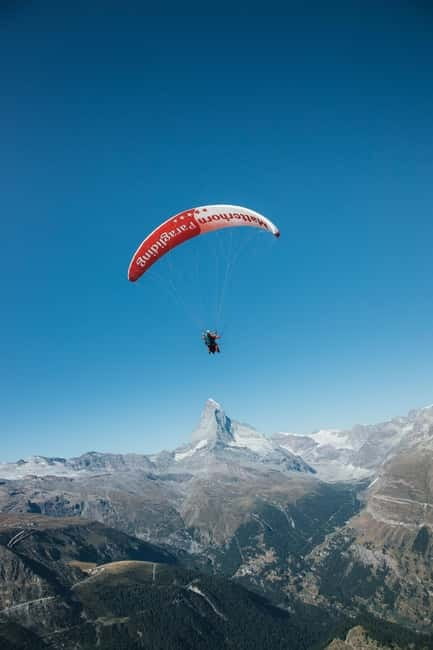
- Small group (max 3 participants) means more personal attention.
- Professional tandem pilots with calm, patient instruction in multiple languages.
- Safety-first rhythm: briefing, gear fitting, and guided steps before you launch.
- Matterhorn photo stop + aerial viewing time that’s built into the flow.
- Warm flysuit, helmet, hat, and gloves, so cold doesn’t take over the experience.
- Wildlife-spotting potential from above, like ibex, chamois, marmots, or eagles.
Why Zermatt Tandem Paragliding Feels Different Than a Typical Thrill
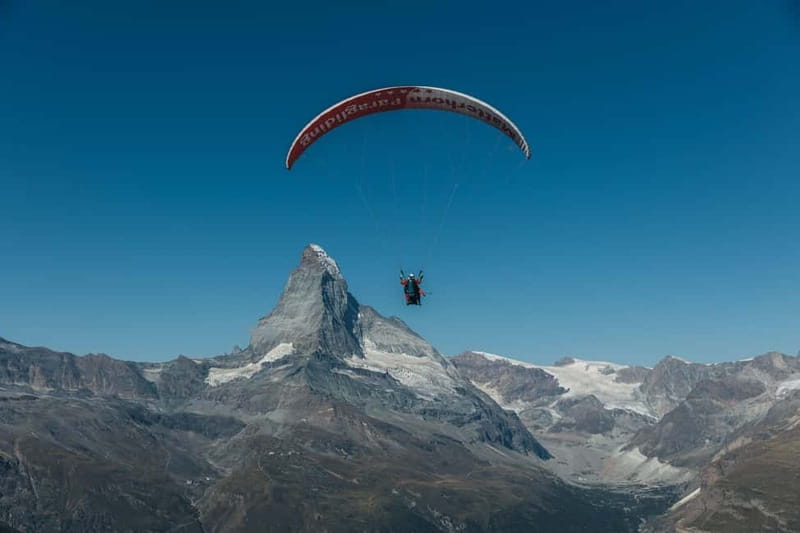
Zermatt is already dramatic on the ground. From the air, it turns into a 360-degree map of peaks, snowfields, and valleys, and the Matterhorn doesn’t just show up once. It stays part of the story while you glide, tilt, and look around at angles you can’t get any other way.
What makes this flight worth your time is the balance. You get adrenaline, sure, but the experience is run like a smooth alpine operation: meet your pilots, get suited up, get a clear safety briefing, then fly. That matters because your brain stays calmer, and you can actually enjoy the view instead of bracing the whole time.
You can also read our reviews of more tours and experiences in Zermatt.
The 2-Hour Flow: What Happens After You Meet Your Pilots
This experience runs about 2 hours, but the exact timing depends on when you take off. You’ll meet at Vispastrasse 32 (and sometimes your meeting location can shift based on takeoff conditions, so watch for instructions).
From there, expect a steady progression rather than a chaotic scramble. You’ll take a cable car up (about 30 minutes), then spend time on foot for briefing and photo views, and finally enjoy your main time in the air for roughly 25 minutes. It’s built so the best moments aren’t rushed, and you’re not left waiting around with nothing to do.
Cable Car Time and the Build-Up to the Launch
The cable car portion is part transportation, part warm-up for your senses. Once you’re higher, the angles start changing quickly, and you can sense what you’ll feel once you’re off the ground. It’s also a practical setup step, getting you into position where the flight makes sense safely.
If you’re prone to feeling anxious, this is good news. You get time to settle in, scan the mountain shapes, and realize you’re not jumping into the unknown. You’re moving toward it step by step.
The Matterhorn Photo Stop: Where You Get Oriented Fast
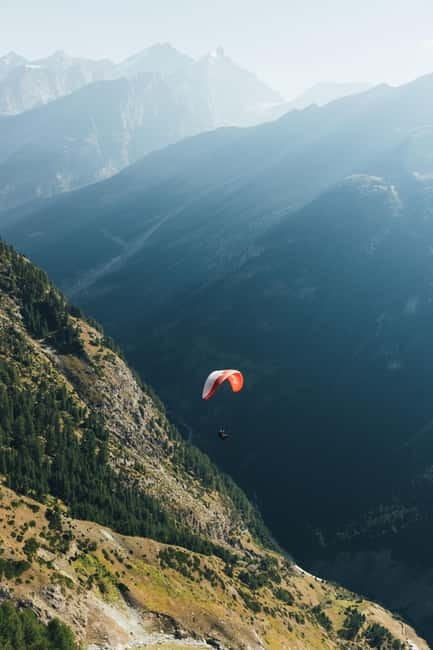
Before you fly, you’ll have a dedicated spot for the Matterhorn photo stop, plus a short walk and a safety briefing (about 15 minutes total). This part is more useful than it sounds. It helps you understand what’s coming, where the wind and lines matter, and what your pilot will do once you’re airborne.
You’ll also get scenic views on the way, which is a big deal in Zermatt. Even if weather limits perfect flying conditions, the mountain setting here is still strong enough to make this portion feel worthwhile. Think of it as building anticipation with actual scenery, not waiting in silence.
Main Flight Time: 25 Minutes Above Snow, Glaciers, and Valleys
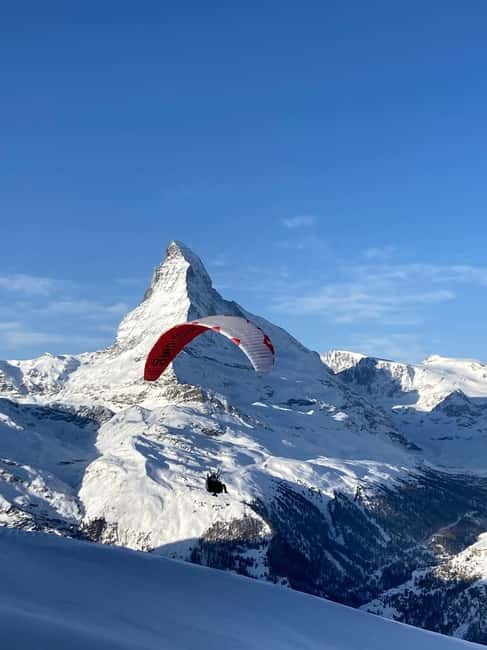
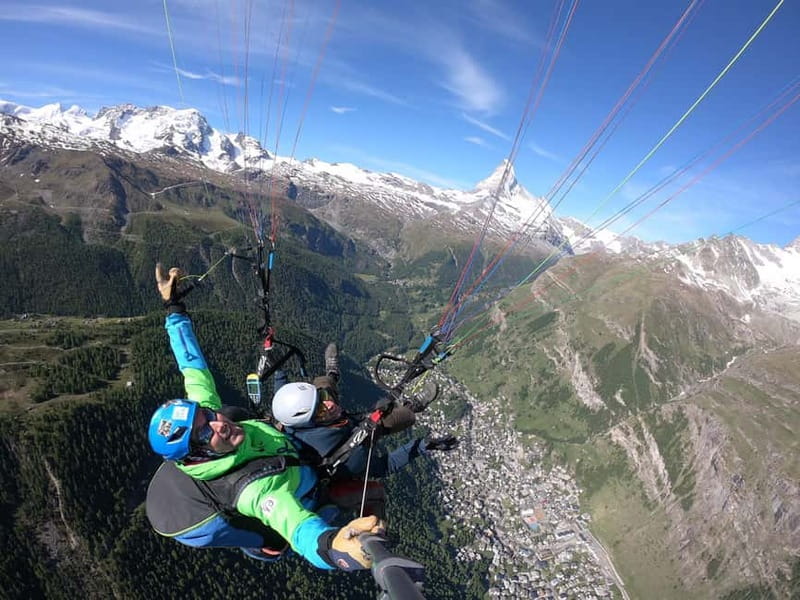
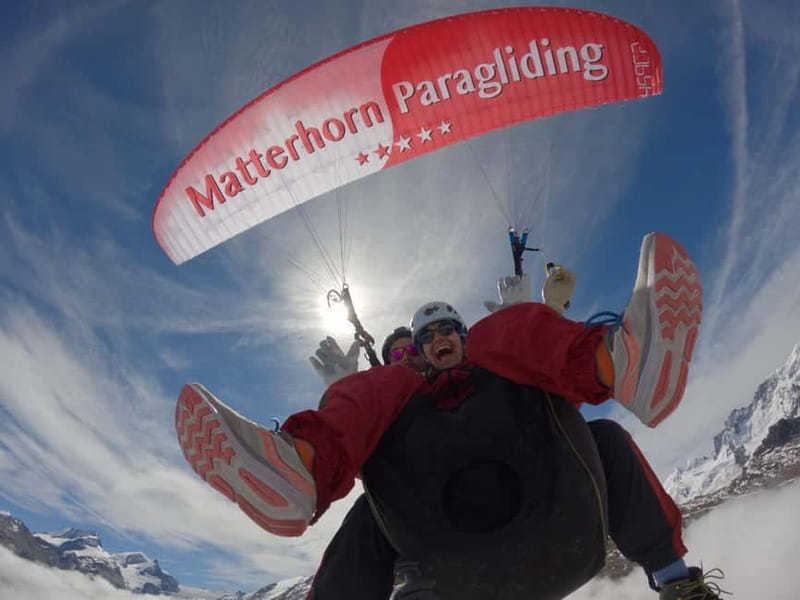
The heart of the experience is the aerial segment: about 25 minutes of flying. You’ll be seated in a tandem arrangement with your pilot, and your job is mostly to look around, breathe, and trust the plan.
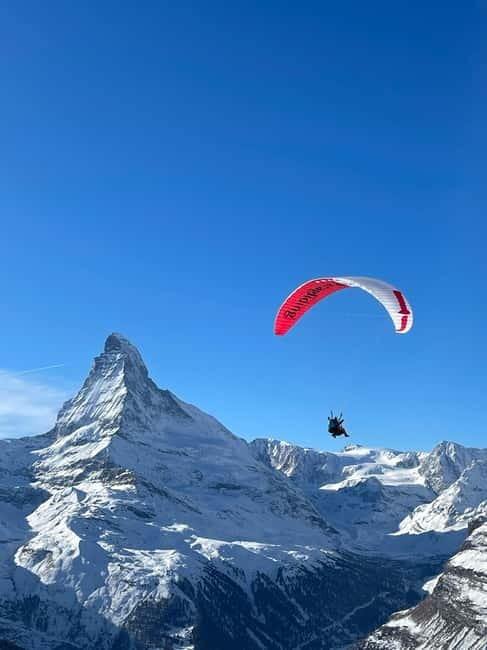
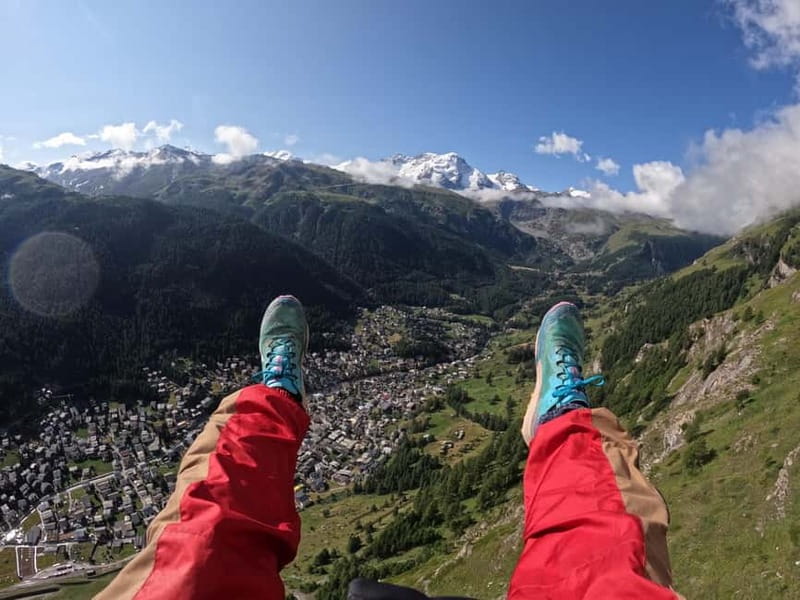
This is where the “best Matterhorn views” claim earns its keep. From the air, the Matterhorn reads as a true 3D object instead of a distant icon. You’ll also get broad views over surrounding peaks and glaciers, and you may see wildlife below. The flight is described as a good chance for spotting ibex, chamois, marmots, or even golden eagles soaring alongside you.
And yes, there’s that moment where the world feels suddenly quiet. Even thrill-seekers often walk away saying it didn’t feel like panic. It felt like freedom with a harness and a very competent pilot.
Safety, Gear, and the Pilot Team (Names You Might Fly With)
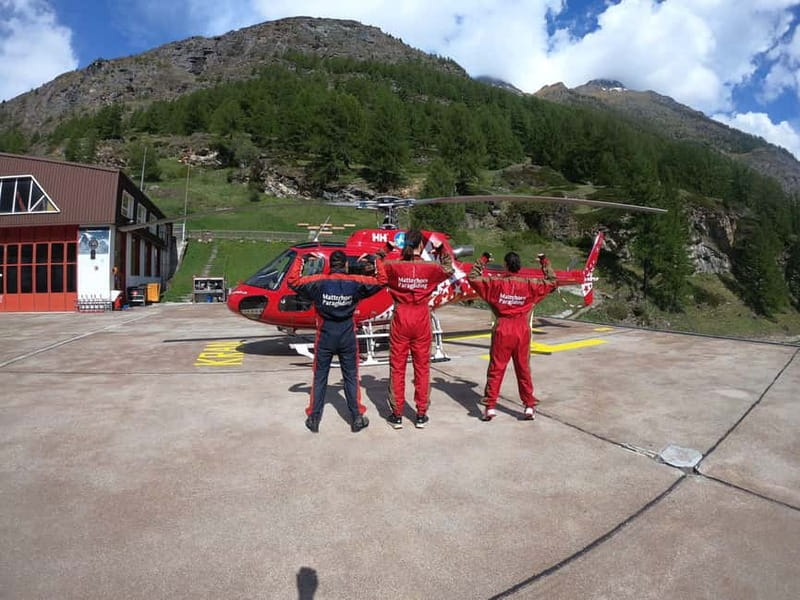
Safety is clearly treated as the main event here. You’ll get all necessary equipment, and you’re provided a flysuit to keep you warm, plus a helmet, hat, and gloves. That reduces two common risks: cold exposure and gear-fumbling stress.
The pilot experience also comes through in the way the trip is described. People specifically call out professionalism and calm instruction, including pilots named Bruce, Alan, Yan, and Jann. One review-style detail that stands out is the way instruction is handled for first-timers, including playful but clear coaching like counting down with the classic 3-2-1 and run routine.
A practical note: takeoff requires a moderate fitness level because passengers run a short distance. You don’t need to be a marathoner, but you should be comfortable with quick movement and short exertion.
Price and Value: Why $341 Can Make Sense in Zermatt
At $341 per person, this isn’t a budget activity. But it also isn’t just a “try it once” stunt with a bare-minimum guide. You’re paying for a tandem pilot, a safety briefing, full equipment, and the warm flying suit and protective gear.
You’re also getting a small group limit of up to 3 participants, which usually means less waiting and more attention on your needs. And you’re paying for a very specific payoff: the Matterhorn view from the sky, built into the flight plan rather than hoped for later.
What’s not included can affect your total. There’s no photo and video package included, and you’ll need transportation to takeoff (the pilots assist you in buying it). Still, if you want the classic “I can’t believe I saw that” memory, this price can feel fair for what you get.
What to Bring (And What to Leave Behind)
You don’t need a bunch of gear, but you do need the right basics. Bring sunglasses and waterproof shoes. The Alps can change fast, and you’ll be happier if your feet stay dry and secure.
Leave behind luggage and large bags, and don’t bring backpacks. Alcohol and drugs are not allowed. If you keep your packing simple, the whole process is smoother and you’ll spend less energy worrying about what to carry.
Who This Flight Suits Best (And Who Should Skip It)
This is a great fit if you want a bold, scenic experience with strong coaching and tight group control. It’s also described as wheelchair accessible, which is a meaningful plus if you need that kind of support.
That said, it’s not suitable for everyone:
- Children under 4 years
- Pregnant women
- People with back problems
- People with heart problems
- People over 65 years
- People over 200 lbs (91 kg)
If you’re within the limits and you can handle a short run for takeoff, you’ll likely love it. If any of the health or age restrictions apply, it’s better to choose a different Zermatt activity that fits your body and your safety needs.
Weather Reality in the Alps: Your Best Chance to Fly
In Zermatt, weather isn’t a footnote. The team may cancel or change meeting times or takeoff location due to conditions. If flying isn’t possible because of weather or safety requirements, you’ll receive a full refund.
This is one reason it pays to keep your schedule flexible when possible. If you can shift plans around the day’s conditions, you improve your odds of actually taking off.
Photos, Video, and Reliving the Moment
There’s a Matterhorn photo stop before the flight, so you’ll have a chance to capture the view from the ground. For higher-end keepsakes, a photo and video package is available, but it’s not included in the base experience.
If you care about having footage to show friends (and to convince yourself you really did it), plan for an add-on decision. The good part is you don’t have to decide before you see how the flight feels.
Quick Practical Tips Before You Go
- Wear waterproof shoes so you’re not stressed about slippery ground.
- Bring sunglasses for glare at altitude.
- Keep items minimal since large bags and backpacks aren’t allowed.
- Expect a short run for takeoff, and don’t overthink it if you’re otherwise healthy and mobile.
Also, use the briefing time. It’s not filler. Knowing what your pilot is going to do helps you relax, look where you want, and enjoy the ride rather than scanning for instructions.
Should You Book This Matterhorn Tandem Paragliding Flight?
If you want one Zermatt activity that’s visibly different from cable cars and viewpoints, I’d book this. The payoff is clear: Matterhorn views from the air, a structured flow that includes warm gear and safety guidance, and a small group setup that keeps things personal.
Book it if:
- You’re comfortable with a short run and basic physical effort.
- You want a guided experience led by experienced tandem pilots.
- You care about alpine views you can’t get from the ground.
Think twice if:
- You’re outside the stated health limits.
- You’re very sensitive to short exertion.
- You want a guaranteed flight no matter the weather. In the Alps, conditions can change, and the team will adjust for safety.
If you’re eligible and you’re okay with weather-dependent timing, this is one of the best ways to experience Zermatt as more than a postcard.
FAQ
How long is the tandem paragliding flight in Zermatt?
The full experience lasts about 2 hours. Starting times depend on availability.
Where do I meet the guides?
You meet outside the station, at Vispastrasse 32. Depending on takeoff conditions, the meeting location can change, and you’ll be informed beforehand. The activity ends back at the meeting point.
Do I need to buy transportation to takeoff?
Transportation to takeoff is not included. The pilots will assist you in buying it.
What’s included in the price?
You get the tandem paragliding flight with a pilot, a safety briefing, all necessary equipment, plus a flying suit to keep you warm, along with a helmet, hat, and gloves.
Is there a photo or video package included?
No. Photo and video are not included in the base experience.
What should I bring and wear?
Bring sunglasses and waterproof shoes.
Is the flight wheelchair accessible?
Yes, the activity is listed as wheelchair accessible.
Are there weight and age limits?
It’s not suitable for children under 4 years, people over 65 years, and people over 200 lbs (91 kg).
What medical conditions make it not suitable?
It’s not suitable for pregnant women, and people with back problems or heart problems.
What happens if the weather is bad?
The operator may cancel or change the meeting times or takeoff location due to conditions. If flying can’t be done for weather or safety reasons, you’ll receive a full refund.