REVIEW · QUEENSTOWN
Queenstown: Tandem Paraglide – Winter – Coronet Peak 5400ft
Book on GetYourGuide →Operated by Skytrek Tandem Hang Gliding & Paragliding · Bookable on GetYourGuide
Floating above Coronet Peak feels unreal. You get a true bird-eye view in winter, launching from New Zealand’s highest commercial launch at 5400ft with SkyTrek. I like that it’s a straightforward, guided experience where you don’t need to “learn” anything before takeoff.
I also love the ride time: you’re usually in the air about 15–20 minutes, descending gently while your pilot does the navigating. The main drawback to plan for is cost creep—your chair-lift access needs a ski-field pass, which is currently $35 for a one-off winter ticket (or you can use your own pass).
In This Review
- Key points worth getting excited about
- Why Coronet Peak’s 5400ft Launch Is the Main Event in Queenstown
- Getting There Without Stress: SkyTrek Desk and the 20-Minute Shuttle
- The Chair-Lift and Ski Pass Reality Check (It’s Not Included)
- Up Top at Coronet Peak: Safety Briefing, Harness Fit, and the Launch Steps
- In the Air: Gentle Descent, Long Views, and Trying to Control (Maybe)
- Landing Smoothly and Getting Back to Queenstown in One Piece
- Price and Value: What $216 Gets You (and What to Add)
- Who This Suits Best in Winter (Weight, Age, and the Small-Group Factor)
- Winter Timing Tips That Keep the Day Comfortable
- Should You Book Tandem Paragliding at Coronet Peak?
- FAQ
- Where do I meet for SkyTrek tandem paragliding?
- How long is the tandem paragliding experience?
- Is the flight price all-inclusive?
- How do I access the take-off location?
- What is the ski-pass cost if I don’t have one?
- What’s the maximum weight for this activity?
- What age is the minimum for this tour?
- Is the experience in English?
Key points worth getting excited about
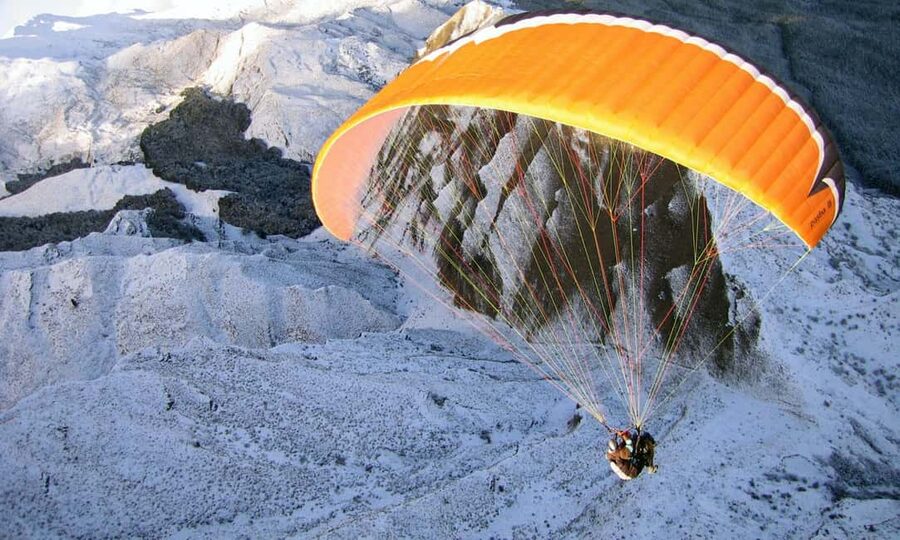
- 5400ft takeoff from New Zealand’s highest commercial launch at Coronet Peak
- Long flight time for a tandem: about 15–20 minutes in the air
- Snow-capped mountain views that look great in winter light
- Small group format with up to 5 participants, so you’re not lost in a crowd
- English-speaking instruction with clear safety steps before launch
- Pilot interaction possible, including chances to try control in at least some flights (for example, Tai has been noted doing this)
Why Coronet Peak’s 5400ft Launch Is the Main Event in Queenstown
Queenstown is famous for adrenaline, but this version is all about big height and big sky. This tandem paragliding flight starts from Coronet Peak at 5400 feet, positioned as New Zealand’s highest commercial launch. That’s not just bragging rights—starting high is what gives you that slow, scenic feel instead of a quick “blink and you’re down” experience.
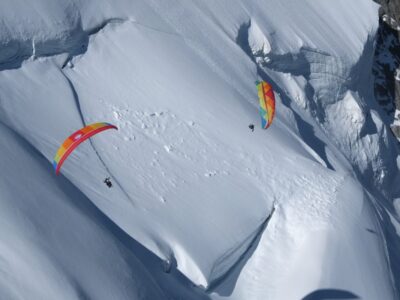
In winter, the view quality tends to be extra crisp because everything around you is snow-dusted and the mountains look more defined from above. You’ll be flying over a ski-field area first, then drifting out with a steady, gradual descent. Think: calm in the air, exciting because you’re actually up there.
I also like the “winter-specific” feel of it. The whole setup—chair-lift access, a short walk in snow to the launch area, and the gear being checked—feels like it’s built for the season rather than a summer routine with a colder jacket.
You can also read our reviews of more tours and experiences in Queenstown.
Getting There Without Stress: SkyTrek Desk and the 20-Minute Shuttle
Your day starts at the SkyTrek desk inside the Ziptrek Ecotours Shop. From there, you’ll ride a courtesy shuttle out to Coronet Peak. It’s a short 20-minute drive from central Queenstown to the ski-field road.
This matters more than it sounds. Queenstown’s not a huge city, but getting to mountain launch points can still eat time if you’re doing it on your own. The courtesy transport keeps the experience tight, and it helps you avoid arriving frazzled—especially helpful in winter when timing and cold can both work against you.
Also, the experience runs for about 2 hours total, usually scheduled in the morning and afternoon. That’s a nice window: long enough to feel like a real activity, not so long that it wrecks your whole day.
The Chair-Lift and Ski Pass Reality Check (It’s Not Included)
Here’s the one practical detail you need to budget for: the flight includes the paragliding experience and the courtesy transport, but a ski-field pass to ride the chair-lift is required to reach the take-off location.
You have two options:
- Use your own ski pass if you already have one
- Buy a one-off pass from SkyTrek at check-in (currently $35 in winter 2024)
This is the main “gotcha” because most people think they’re paying just for the flight. In reality, the chair-lift is part of the access process, so you should treat it like part of the package cost even though it’s listed separately.
I’d call this a minor drawback rather than a dealbreaker. The flight value is still strong, but only if you go in knowing you’ll likely add that $35 to your total.
Up Top at Coronet Peak: Safety Briefing, Harness Fit, and the Launch Steps
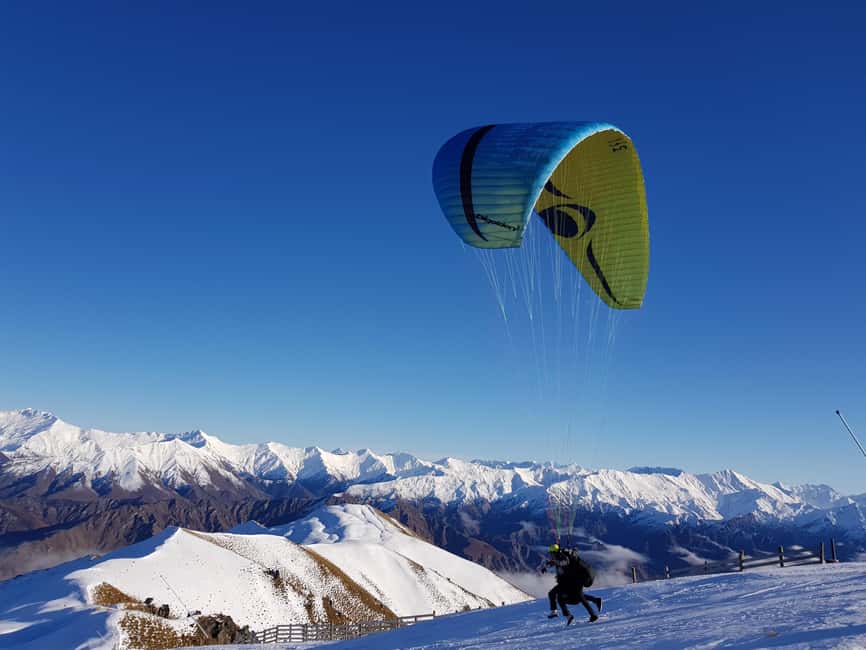
Once you’re on-site, your pilot guides you to a chair-lift, then takes you up to the top of Coronet Peak. After that, there’s a short walk in snow to the launch area.
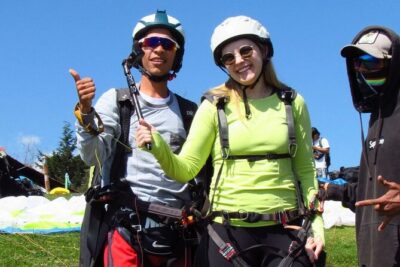
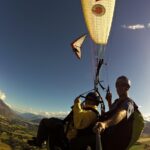
At the top, the tone shifts to calm and procedural. You’ll get a safety briefing from your pilot, plus an explanation of what you’ll need to do together to become airborne. Harnesses and helmets are fitted and checked. You’re not just being handed a seat—you’re being set up.
During launch prep, you’ll feel the gear come alive. The glider is prepared and typically inflates behind you, and then after a couple of steps you go airborne. That moment is quick, but it’s not chaotic. You’re guided through it, and the setup is meant to make the whole thing feel coordinated.
A couple of details that I think matter for first-timers:
- You’ll have an English-speaking instructor/pilot, so instructions are clear
- The team includes both a pilot and ground support, so the workflow is handled end to end
In the Air: Gentle Descent, Long Views, and Trying to Control (Maybe)
The highlight isn’t just that you’re flying—it’s how you’re flying. After launch, your pilot navigates the paraglider over the ski-field, and then you settle into a slow, gentle descent.
You’re usually in the air for about 15–20 minutes. For tandem paragliding, that’s a meaningful chunk of time. It gives you enough moments to stop bracing for takeoff, start looking around, and actually enjoy the view instead of racing your own adrenaline.
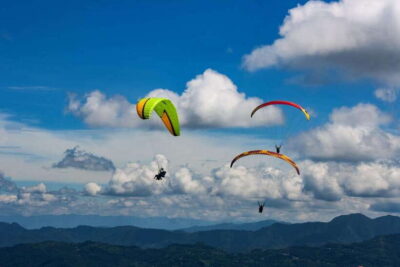
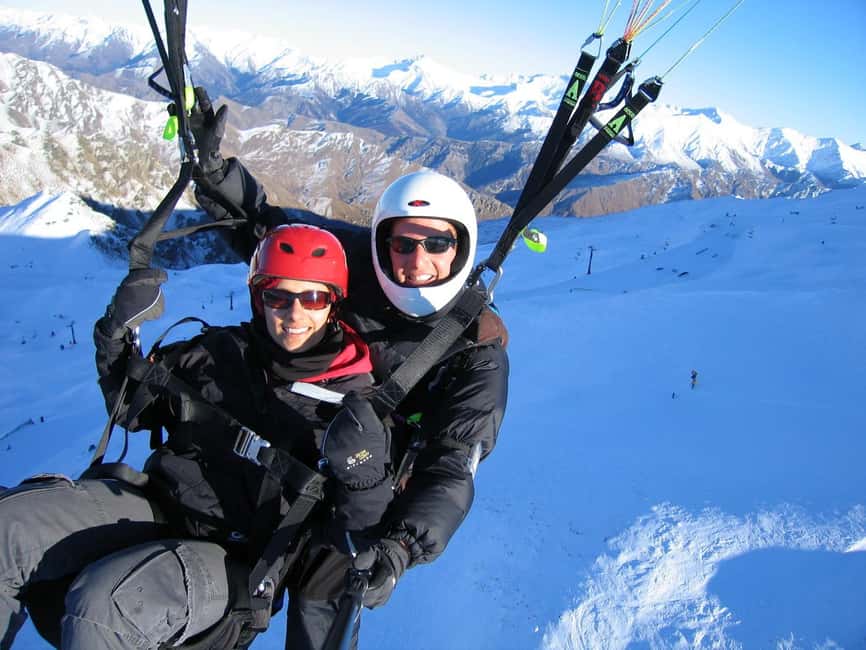
The views are the real payoff. You’ll be looking at the snow-capped mountains from above, with winter contrast making the terrain look more sculpted. It’s the kind of perspective that turns Queenstown’s surrounding drama into something you can literally see from end to end.
One nice detail pulled from past experiences: one participant flying with a pilot named Tai noted that he’s experienced and even let them try to control it. If you end up with Tai, you might get that extra interaction. If not, don’t assume you’ll always get control attempts, but do expect your pilot to explain what’s happening as you glide.
Landing Smoothly and Getting Back to Queenstown in One Piece
After your flight, you’ll land on the valley floor. The experience is designed to be low-stress at the end as well: once you’re down, the equipment is packed up, and your ground crew handles the return.
The whole experience wraps up at about 2 hours total, including the courtesy transport back to Queenstown. That time frame is helpful. You can plan dinner afterward without guessing how late you’ll be.
It also means the day feels complete, not like a “drop and pray” adventure. You’re part of a system: shuttle out, chair-lift access, launch prep, flight, pack-up, shuttle back.
Price and Value: What $216 Gets You (and What to Add)
At $216 per person, this is not the cheapest thing you can do in Queenstown—but it’s also not trying to be. The value comes from the parts you’re actually paying for:
- The tandem flight itself from a high, purpose-built launch area (5400ft)
- The staff time: safety briefing, harness/helmet fitting, pilot navigation
- The courtesy transport to and from Coronet Peak
The only common add-on is the chair-lift ski pass. If you don’t already have one, that $35 one-off pass is likely your next line item. With that in mind, your effective budget is usually closer to the flight price plus the lift access cost.
Is it “worth it”? If you want a high-altitude, winter-time experience with long enough airtime to absorb the views, this pricing structure makes sense. You’re paying for aircraft-grade guidance and the logistics that get you to a real launch point—not just for a thrill.
Also, the operator has a strong track record. The experience sits at about a 4.8 rating from 16 reviews, which usually signals consistent operations rather than a one-off perfect day.
Who This Suits Best in Winter (Weight, Age, and the Small-Group Factor)
This is tandem paragliding, so you don’t need previous flying skills. But it’s still not for everyone.
It isn’t suitable for children under 6 years. There’s also a maximum weight of 120kg. If you’re near that upper limit, you should plan to confirm details ahead of time.
You’ll be flying with a small group of up to 5 participants. I like this for a couple of reasons. It keeps the briefing more personal and reduces that waiting-around crowd feeling. In winter conditions, fewer people usually means smoother movement through check-in, gear fitting, and chair-lift timing.
Language is English, and the safety briefing is delivered by your pilot/instructor. If you prefer clear instructions in English, this fits well.
Winter Timing Tips That Keep the Day Comfortable
You’re launching from a ski-field, walking in snow to the launch area, and fitting into harnesses and helmets in cold air. The data doesn’t spell out exact clothing requirements, but the reality of winter flight is simple: being cold helps nobody.
So I’d plan like this:
- Dress warm enough for time outside before takeoff
- Wear layers you can manage if temperatures shift during your 2-hour slot
- Bring gloves or whatever you normally use for winter cold comfort
Also, pick a time of day that matches your energy. The activity runs in the morning and afternoon, so choose what works with your Queenstown plans—especially if you’re also doing other mountain-view activities.
Should You Book Tandem Paragliding at Coronet Peak?
Book it if you want a winter Queenstown experience that’s built around real altitude and a long, calm glide. The 5400ft launch and the 15–20 minute airtime are the core reasons. Add in the small group size (max 5) and the fact that you get an English briefing and hands-on harness checks, and it’s a great choice for first-timers who want the thrill with structure.
Skip it or think twice if you’re mainly looking for a low-cost activity. The chair-lift ski pass isn’t included, and that $35 add-on can surprise you at the desk. Also, if you or your travel partner doesn’t meet the 120kg maximum or the minimum age of 6, then this won’t be the right fit.
FAQ
Where do I meet for SkyTrek tandem paragliding?
You meet at the SkyTrek desk inside the Ziptrek Ecotours Shop in Queenstown.
How long is the tandem paragliding experience?
The total experience is about 2 hours, including transport to Coronet Peak and the flight.
Is the flight price all-inclusive?
The flight and courtesy transport to Coronet Peak are included. A ski-field pass for the chair-lift is not included.
How do I access the take-off location?
You’ll ride a chair-lift to the top of Coronet Peak, then do a short walk in snow to the launch area. Access requires a ski-field pass.
What is the ski-pass cost if I don’t have one?
A one-off ski-field pass can be purchased at check-in for $35 (winter 2024).
What’s the maximum weight for this activity?
The maximum weight is 120kg.
What age is the minimum for this tour?
It is not suitable for children under 6 years.
Is the experience in English?
Yes. The instructor/pilot provides the briefing in English.